Croatia extends from the furthest eastern edges of the Alps in the north-west to the Pannonian lowlands and the banks of the Danube in the east; its central region is covered by the Dinara mountain range, and its southern parts extend to the coast of the Adriatic Sea.
The climate of Croatia varies from Mediterranean along the Adriatic coast to continental, inland. The coastal areas have hot, dry summers and rainy winters yet the inland areas are cold in winter and warm in summer. The coast benefits from refreshing winds in the summer and the mountain ranges shield them from bitter winds in the winter. Sea temperatures never fall below 10 degrees in the winter and in August it can be as high as 26 degrees, due to warm currents flowing north up the Adriatic coast. In spring and early summer a sea breeze keeps the temperature down along the coast. This breeze that usually starts around 9am is perfect for sailing. The islands benefit from up to 2715 hours of sunshine a year, the sunniest being Hvar.
Belonging to the Middle-European and Mediterranean cultural and civilisation circle and tradition, Croatia is extremely rich with valuable cultural and historical heritage, pointing to the millenium old presence of Croatia in the area.
The specific urban culture of coastal and island areas is easily seen in towns such as: Porec, Rovinj, Pula, Zadar, Sibenik, Hvar, Korcula and Ston, with Split (Diocletian’s Palace) and Dubrovnik representing a part of the world cultural heritage under UNESCO protection.
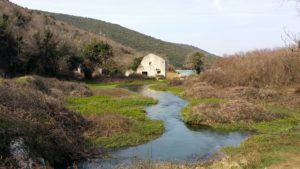
Istria is indeed a feast for the eyes. Its streams flow to the sea through deep valleys and gullies which bring to mind the ancient local myths about giants. Rolling hills overlook the fields and valleys with little towns perched on the peaks, recalling some old paintings. The view is splendid: white-topped mountains, lush wheat fields, plateaux, valleys, vineyards and olive groves on hillsides, and, finally the sea.
As you get to know Istria you will notice more and more enchanting details: church facades and portals, tiny village alleyways with their specific architectural touches, the babble of a stream, the blossoming cherries. Everything is warm–hearted and friendly here: nature, towns and people.
The first traces of prehistoric people on the territory of Istria date back to the period of the Lower Palaeolithic. The stone hand axe made by early man is about 2 million to 800,000 years old and was found in the vicinity of Pula, in Šandalja Cave. Finds from the Upper Palaeolithic (40,000-10,000 BC) were found at the sites of Šandalja II and St. Romuald’s Cave in Lim Bay.
In St. Romuald’s Cave (11 km from Vrsar and 9 km from Rovinj) a large number of bones belonging to over 40 animal species were found, such as bones of the cave bear, cave lion, leopard, cave hyena, wild horse, large deer, snow hare etc., which were mainly the game of prehistoric people-hunters of that time. The discovered tools are proof of the existence of early man from the Old Stone Age, whereas the cave itself is a speleological attraction with cave decorations, bats and other animals. It was named after St. Romuald who in prayer and meditation spent three years in this cave, from 1001 until 1004.
Numerous other prehistoric finds from the Neolithic (6,000-2,000 BC) prove the changes in life style, when prehistoric people instead of only hunting engaged in raising cattle and planting crops. Techniques for making tools and weapons became more complicated and people discovered how to make pottery.
The largest town on the Istrian peninsula offers a diversity of attractions to lovers of culture. The rich itinerary of its three thousand year old history, where every step you take through the old town is a landmark, begins and ends with the Roman amphitheatre.
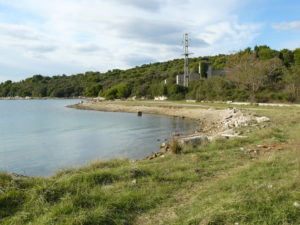
A great tourist asset is surely 190 kilometres of indented coastline, crystal-clear sea and beaches to suit everyone’s needs: smooth and even stone surfaces or pebbles for all generations, especially families with children or “secluded” beaches hidden by untouched greenery for those who want a bit of privacy.
While strolling through Pula you will come across numerous monuments of Roman architecture: the Triumphal Arch of the Sergi from the 1st century B.C., Hercules’ Gate and Twin Gates, the Temple of Augustus, Arena and Small Roman Theatre in the town centre.
A unique experience will be moments of relaxation in the main town square, which has managed to retain its role as the meeting place since the Augustan Age.